
Manassas Deed Types
Manassas deed records held by the Circuit Court Clerk cover far more than simple transfers of ownership. A conveyance deed names the buyer, the seller, and the legal description of the parcel. A deed of trust works differently. It records a loan secured by the property. A certificate of satisfaction or release later clears that lien. Plats, easements, judgments, and other liens round out the collection, and each can shape how a parcel is read even when the assessor's owner of record field stays the same.
| Deed Type | What It Does | Common Use |
|---|---|---|
| Deed | Records a conveyance and its legal description | Confirming a transfer or grantee |
| Deed of trust | Shows a security instrument tied to a loan | Reviewing recorded encumbrances |
| Release or satisfaction | Shows that a recorded lien was released | Checking the later status of an instrument |
| Plat | Shows a subdivision or site plan reference | Matching lot, block, easement, or revision |
| Easement, lien, or judgment | Records an interest or claim that may affect land | Reviewing instruments beyond a sale deed |
Each document answers a different question. A deed of trust does not convey title, despite the shared word 'deed.' The secured amount shown on it is the original loan figure. It is not today's payoff balance. A release keeps appearing in the deed records long after it has served its purpose. So read the recorded image itself. Check its dates before trusting an index label alone.
Manassas Shared Clerk
Manassas land records live in the Circuit Court Clerk's shared system. The system serves Prince William County, Manassas, and Manassas Park. That arrangement has practical consequences. A single search may return instruments from more than one locality. Assessments and tax bills still follow each property's own jurisdiction. So a deed recorded in the shared index may sit beside records that belong to a different tax roll.
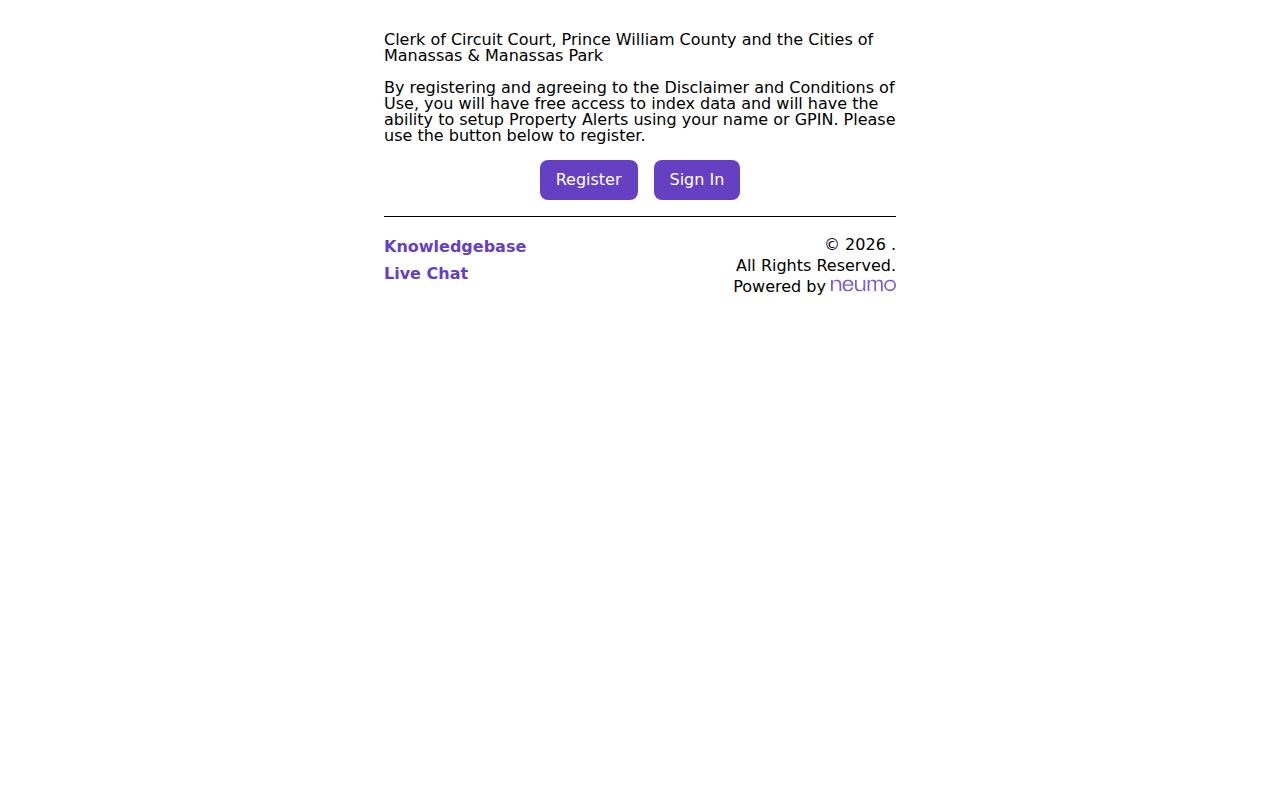
The public PublicSearch land-record index provides free index data. Access comes once you register and agree to its terms of use. The landing page presents Register, Sign In, Knowledgebase, and Live Chat options. The full document-type list is not displayed there. Date controls and party-role fields stay behind login as well. So does the earliest online year. Follow the portal's current prompts rather than assuming a field or a coverage range.
The shared PublicSearch page for Manassas deeds identifies the clerk service and notes free index access and property alerts.
PublicSearch Index and Images
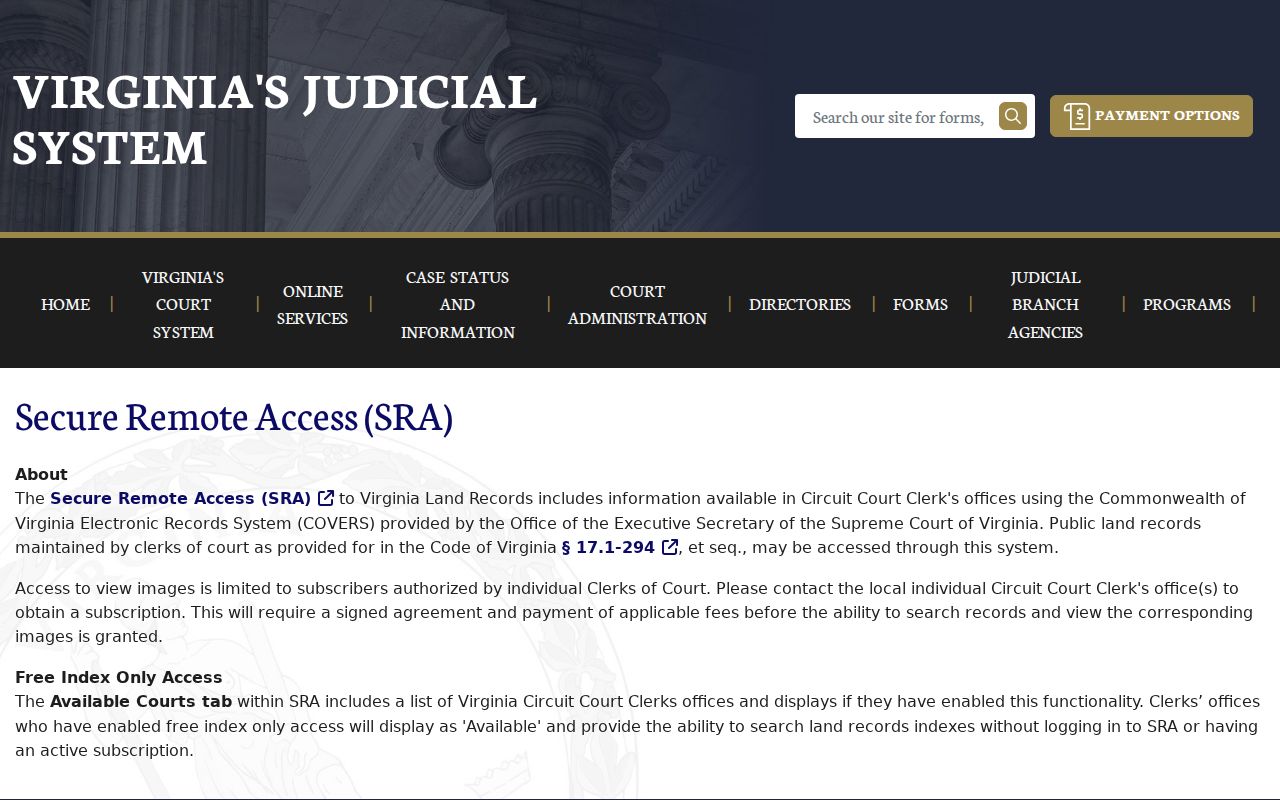
Virginia Secure Remote Access explains why an index result and its image can follow different access paths. Index-only access is free where enabled. Images are another matter. They require a subscriber relationship authorized by the individual clerk. A signed agreement and any applicable fee are also needed. The public landing page does not state the image price for this local service, so ask the Clerk's office directly.
The Virginia SRA overview lays out the statewide service. It also explains its split between index and image access. If an instrument image is unavailable through the account, take the index reference to the Clerk's office. Request access there. Counter hours and local contact details are best confirmed before a visit.
The Virginia land-record SRA page explains index-only access and subscriber image access.
Virginia Land Record Fees
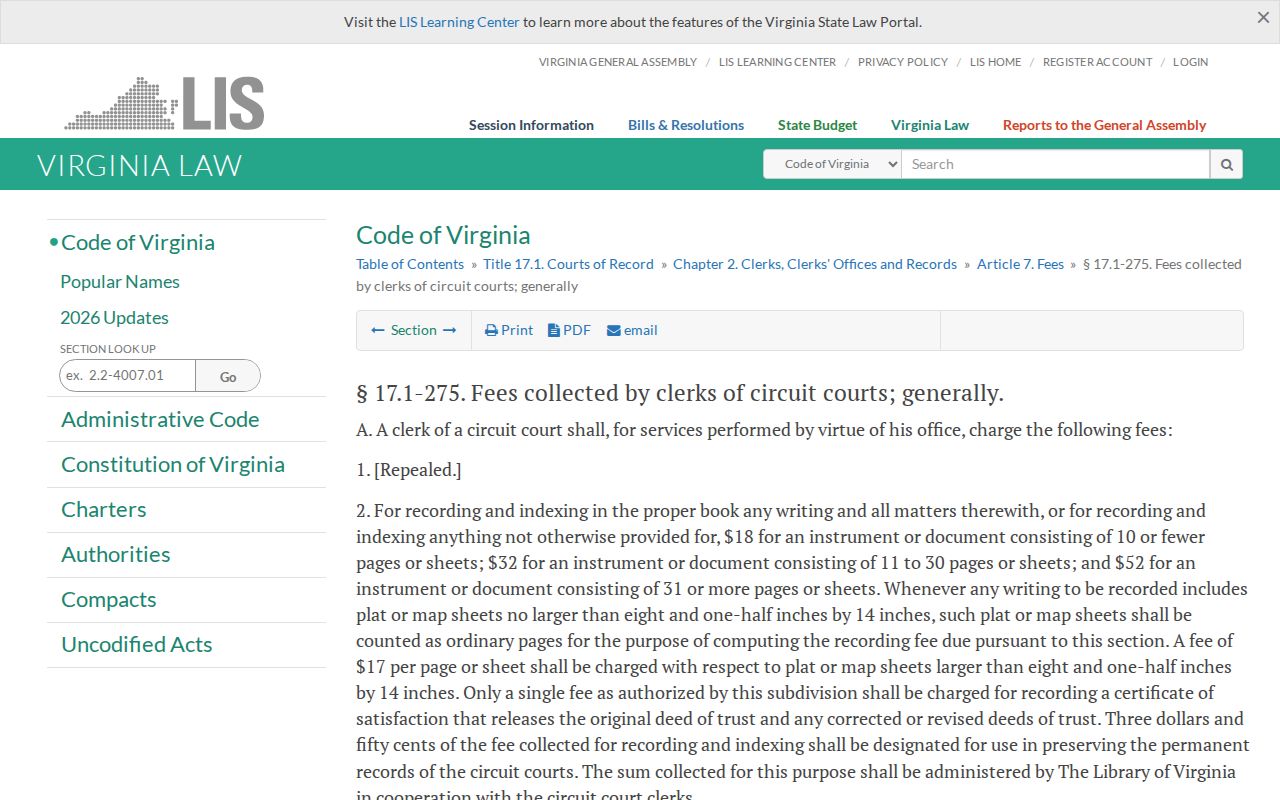
Virginia Code §17.1-275 sets the recording tiers the clerk charges. A deed of one through ten pages costs $18. Eleven through thirty pages costs $32, and thirty-one or more pages costs $52. Oversized plat or map sheets above 8.5 by 14 inches run $17 per page. Copies follow the same statute. Paper, recorded, and electronic copies are $0.50 per page or image.
These figures are statutory amounts, not a guarantee of the total due in every transaction. Other lawful taxes or charges can apply. Remote image access can carry a subscriber fee under §17.1-276 and the clerk's agreement. Check the clerk's current instructions before ordering or paying. A third-party deed-copy mailer is no substitute for confirming the official fee. Confirm the fee with the record custodian.
The Virginia clerk-fee statute lists recording and copy-fee tiers.
Grantor and Grantee in Manassas
Grantor and grantee are the two roles at the heart of every deed. The grantor conveys an interest. The grantee receives it. A grantor-grantee search in Manassas follows those roles across filed instruments. The safest method is to work from the party and parcel prompts the portal displays. Then open the resulting instrument and read the actual roles for yourself.
Start with the latest deed's grantee and recording reference. Open that instrument. Note its grantor. Then search that grantor as a grantee in an earlier period. Compare the legal description. The chain may not line up. Then search name variants, initials, prior names, and entity suffixes. The chain may also pass through an estate or divorce. It could involve a foreclosure, tax sale, correction deed, or parcel split.
- Find the latest deed that names the current recorded grantee and record its filing reference.
- Read the grantor and legal description from the instrument itself.
- Search that grantor as a grantee in an earlier period, using name variants where needed.
- Compare lot, subdivision, and plat references before treating the prior result as the same parcel.
- If the online trail stops, ask the clerk about permanent deed books and older archive routes.
- Grantor
- The person or entity that transfers an interest in the instrument.
- Grantee
- The person or entity receiving the interest described in the instrument.
- Chain of title
- The sequence of recorded transfers used to follow ownership through time.
- Book and page
- A reference to a location in deed volumes; a document or instrument number can identify a later record entry.
Manassas Alerts and Fraud
PublicSearch advertises property alerts by name or GPIN. Its public landing page does not show the sign-up steps, alert event types, delivery method, or whether every Manassas City filing is covered. Treat any alert as a prompt to inspect a filed instrument, not as a judgment about its meaning.
Virginia's official portal matters when a deed-copy solicitation arrives by mail. Confirm the document number and price through the Clerk's office before paying a company that imitates government correspondence. For a suspected filing problem, use the Clerk and local law enforcement rather than trying to resolve it through a map or assessment card.
Older Manassas Deed Trails
Manassas has deep deed history. The town charter dates to 1873. It became the City of Manassas on May 1, 1975. The Godwin Drive area was annexed in 1984. Because of that timeline, an older instrument may carry Town of Manassas or Prince William County wording. The parcel may still sit on the city tax roll today. That naming shift trips up many first-time searchers.
The clerk publishes no stated first year for its online index. No courthouse-loss event appears in the record. A blank search result proves nothing. A missing entry may simply mean the instrument lives in an older book. Ask the shared clerk about permanent records. Try the Library of Virginia archival gateway or the FamilySearch Virginia land and probate catalog for historical leads.
Getting Manassas Deed Copies
Begin with the index entry itself. Write down the party names, the filing date, and the document reference. Do this before you go further. An authorized image may be open through the clerk's subscriber route. Read the full instrument and its legal description side by side.
Otherwise, contact the Circuit Court Clerk. Request a copy or certified record, then verify current local procedures before any trip. The clerk publishes no local mail-order form and no set image price, so ask directly.
Virginia's statutory copy rate is $0.50 per page or image. A recording fee also applies when an instrument is first filed. Certified copies and screen images serve different purposes, so state exactly what you need. Keep the full description and reference handy for later chain work.
Recorded, not guaranteed. Manassas deed records show filed instruments, but an index search is not a title opinion. A full title review may need more than one instrument and should be confirmed by a qualified title professional.
Follow the Legal Description Across Deeds
An address is a fine starting point. A recorded legal description is the stronger test of continuity across Manassas property records. One document may cite a lot and block. It may also cite a metes-and-bounds tract, a subdivision phase, or an earlier parent parcel. The city's GIS parcel layer includes a deed book and page field plus a legal-description field. That can tie a map result to an older instrument. Treat the GIS attribute as a pointer only, never as the record itself.
Read the whole description. Watch for plats, easements, adjoining land, and references to prior instruments. A divided tract may mean one current parcel traces to several older deeds. It may also trace to a subdivision plat. Keep the original wording and recording references in your notes rather than swapping in a modern address. That keeps any later chain review reproducible.
Not Every Deed Entry Represents a Sale
A deed index holds far more than sales. Gifts, family transfers, trustee deeds, estate conveyances, and corrections all sit beside arms-length transactions. The consideration amount may be blank. When present, it may not reflect a normal market deal. The newest date in a search result proves neither a sale price nor a full conveyance of every interest. That date alone settles nothing about the deal itself.
Check the instrument type first. Then confirm the parties, the legal description, the signatures, and any probate or trust authority the document cites. A deed of trust secures an obligation and transfers nothing to a buyer. A release or satisfaction records a later change in that security. For whether a lien, easement, or other encumbrance still binds the parcel, a title professional should review the full deed record chain. The chain tells them what a single entry cannot.