
The Values on a Manassas City Property Record
Manassas City property records hold more than one kind of value. The assessor's account splits value between land and improvements. It then totals those figures for the tax roll. City GIS parcel data adds land, building, and total fields. It may also carry a last-sale date and price. The deed records the conveyance itself. Read together, these records sketch an assessment history. Only a current market analysis or appraisal estimates what a specific property could sell for under present conditions.
| Value | What It Is | Where |
|---|---|---|
| Assessed total | The value carried for local real-estate assessment and tax purposes. | Manassas assessment account. |
| Land value | The assessor's land component, separate from building improvements. | Assessment account and GIS parcel fields. |
| Building value | The improvement component associated with the taxable parcel. | Assessment account and GIS parcel fields. |
| Last sale price | A past transfer amount where recorded or displayed; not a current offer. | GIS sale fields and recorded deed context. |
Virginia's Constitution directs that real estate be assessed at fair market value. Even so, an assessment is a mass appraisal fixed to a date. It serves the roll, not one buyer's walkthrough. A sale price can reflect financing or personal circumstances. It can also reflect improvements the account has not yet captured. The same parcel can therefore show figures that disagree. Check the date and scope of each number before trusting any conclusion.
Use the Valuation Date, Not Just the Displayed Total
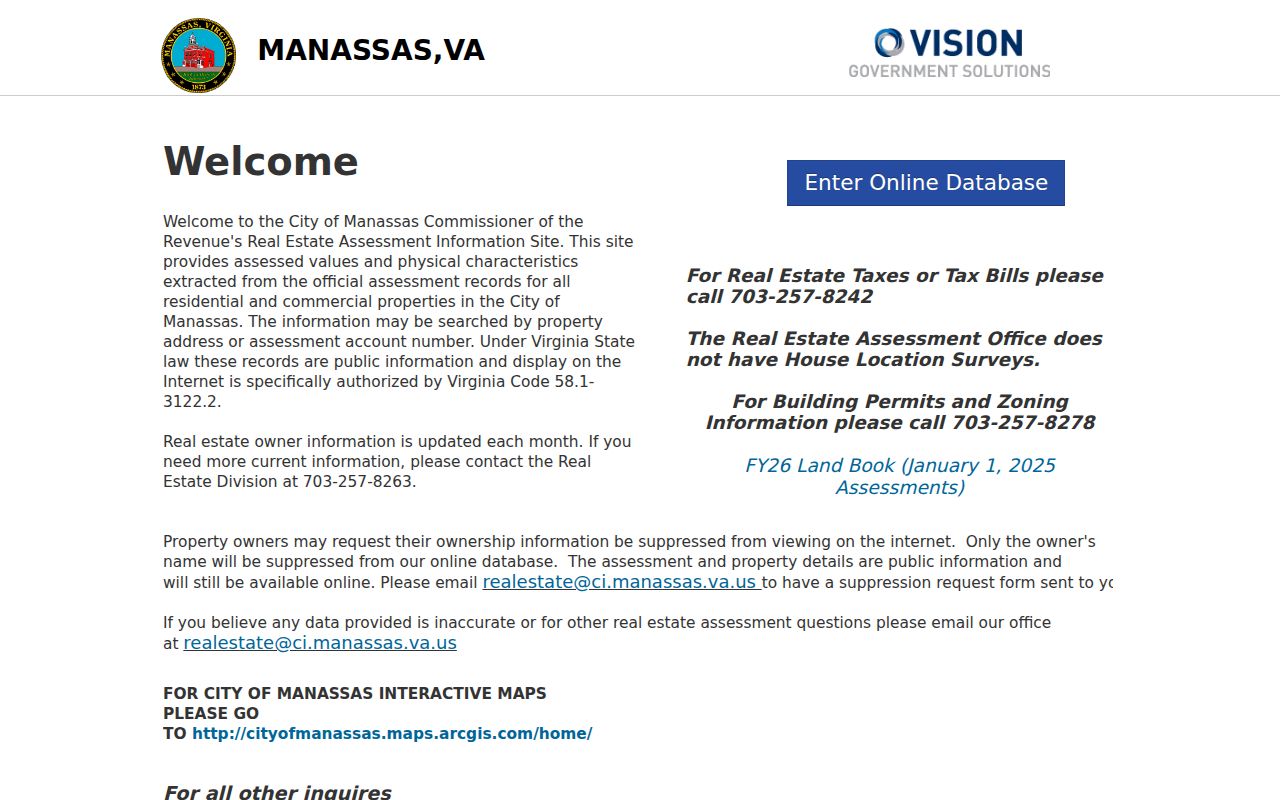
The Manassas assessor's portal identifies the FY26 Land Book. It reflects property on January 1, 2025. A value belongs to that snapshot. It does not automatically fold in a later sale, renovation, damage, or neighborhood change. Owner information refreshes monthly. That update cadence is separate from the valuation date. It is also separate from the reassessment schedule.
Comparing records works best with careful notes. Note the tax year or book year. Note the parcel number. Note the date the source displays too. A jump between two annual totals can come from a new assessment. It may also come from a parcel split, a correction, or an updated property characteristic. The city's notice and assessment history will explain the change. The latest web display is not a real-time estimate.
The Manassas real-estate assessment portal shows the account and the currently published book information.
The Manassas assessment portal shows the search routes and current Land Book link.
How Parcel Characteristics Affect the Recorded Value
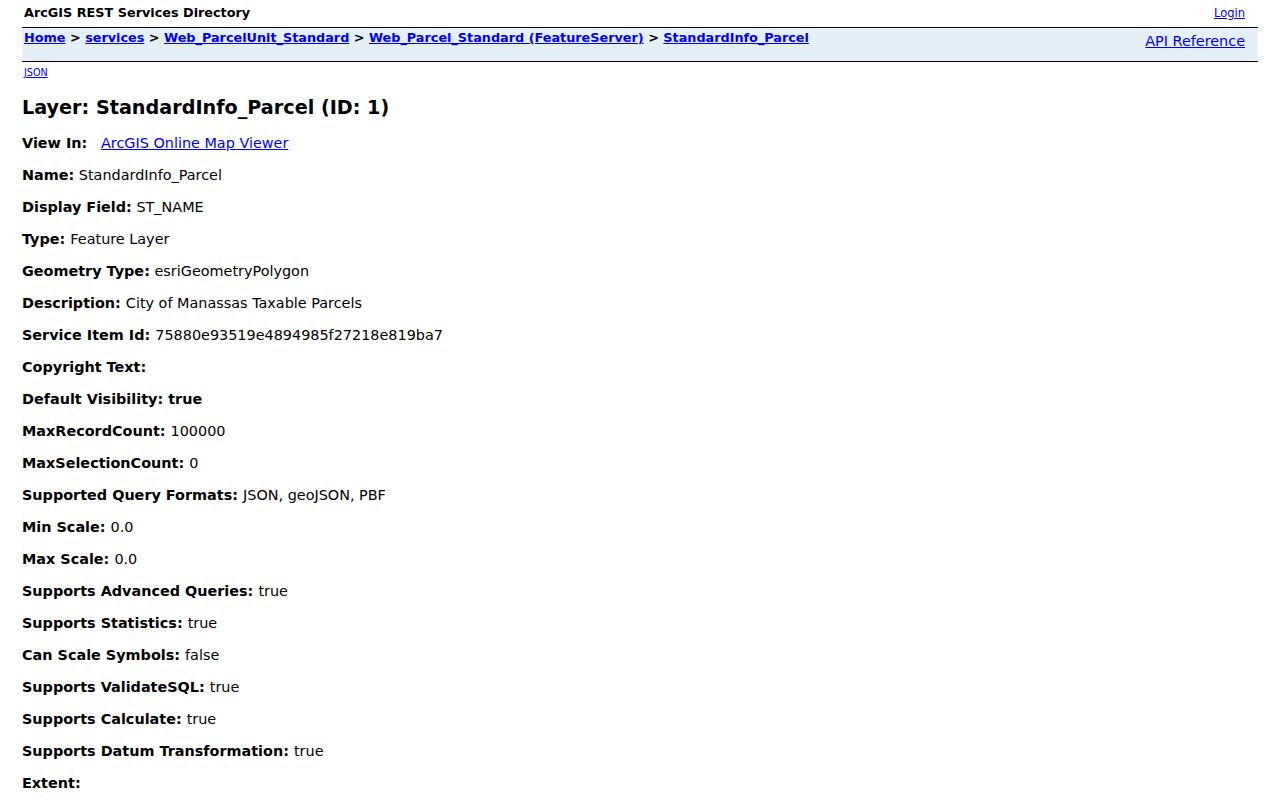
Assessment values ride on parcel characteristics. Land, building, use, classification, and the legal description all shape the account. The city's GIS schema exposes land square feet, land value, building value, total value, zoning, use code, model description, and district. A last-sale date and price offer a comparison point. The fields can lag or stay incomplete. Always confirm that the address, square footage, building description, and tax map number fit the property. A wrong unit or merged parcel can make a plausible total mislead. A split lot causes the same trouble. The map service helps you locate the record. For questions about the assessment account, the official card and the custodian's response govern. Review the standard taxable parcel layer schema to see the city-published fields.
The Manassas standard parcel schema lists value and sale attributes for each mapped feature.
Looking Up a Manassas City Property Value
An address search finds the account. From there, carry the tax map number or account identifier into any map or deed comparison. Multiple units, abbreviated street names, and recent lot splits invite mismatches. Use the parcel identifier and legal description instead. They keep the comparison on the right property.
- Search the Manassas assessor portal by street address or account number and confirm the parcel identity.
- Record the assessment year or Land Book date alongside the total, land, and building figures.
- Check GIS parcel attributes and last-sale information as a separate reference point.
- Open the recorded deed for the transfer parties, instrument date, and legal description.
- For a tax challenge, compare the assessment with relevant evidence and follow the city's notice instructions.
- Assessed value
- The value entered for the local real-estate assessment roll.
- Market value
- A fair-market concept tied to a valuation date; not necessarily a specific sale price.
- Appraisal
- An opinion about a property prepared for a defined purpose and effective date.
Assessment Notices and Public Value Information
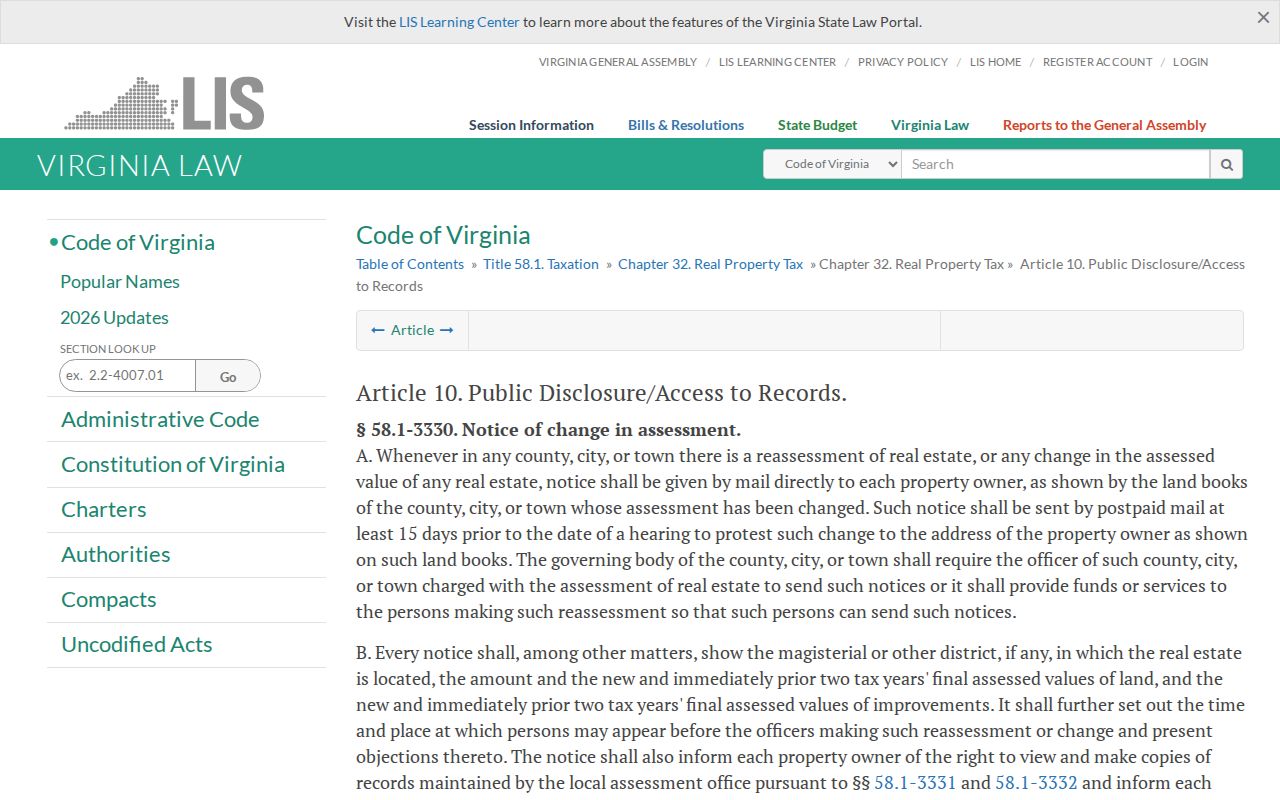
Virginia assessment disclosure law opens appraisal cards and methodology records to the public. The city's assessment office explains how to request it. It also handles name suppression for eligible owners. Disclosure is a route to the record, not a substitute for the annual notice. Virginia Code §58.1-3330 requires each notice to show the current assessed value and the prior two years' values. Use that history to compare annual changes. Odd jumps deserve a second look. Then ask the assessment office for the property card or methodology material for the account. Name the parcel and the line item in question. That keeps the request precise. The Virginia assessment disclosure provisions explain the public-record status of appraisal cards and methodology.
The Virginia assessment disclosure article describes access to cards and valuation methods.
Tax Value Questions and Appeal Evidence
A wrong-looking Manassas City value has two possible roots. One is a factual error. The other is a real disagreement about valuation. Confirm the parcel, ownership, building area, land area, use, and characteristics in the account. Then gather dated sales evidence that speaks to the valuation date and to comparable features. A nearby sale is not automatically comparable. Condition, improvements, lot shape, zoning, and transaction terms all matter. Submit questions through the channel on the notice. Use the deadline printed there or confirm it with the assessment office. An objection does not change the roll until the assessor or review authority acts. Keep the notice, supporting documents, and written response together so the record stays complete.
Connect Assessment Value to the Tax Bill Carefully
An assessed value is only one ingredient in a Manassas City tax bill. The bill also depends on the tax rate. It depends on the billing period, payments, adjustments, and any charges tied to the account. That means a balance cannot be worked out from a value field alone. Nor does a shift in market conditions rewrite a bill that has already posted. The Treasurer's self-service route is where balances and payment history get confirmed. Different offices answer different questions. Assessed value belongs to the Real Estate Assessment Office. Bill amounts and payment status belong to the Treasurer. An owner may need both answers to grasp the full cost of holding a property. Yet the two offices keep distinct roles.
What a Manassas City Assessor Value Is Not
A Manassas City assessor value exists for one purpose: local taxation. The number comes from a valuation process applied across many properties at once. That makes it different from a condition inspection or a broker's pricing opinion. It is not a lender's appraisal either. Nor does it promise what a buyer will pay. A recent recorded deed can add context. But the transfer amount may reflect timing and terms that simply do not carry over to another sale. For a defined transaction or lending purpose, a licensed appraiser can offer a real opinion.
Value vs. price. The Manassas City assessment is a tax-record figure for a stated valuation period. For a purchase, refinance, or estate decision that depends on current market value, consult a qualified appraiser or other appropriate professional.
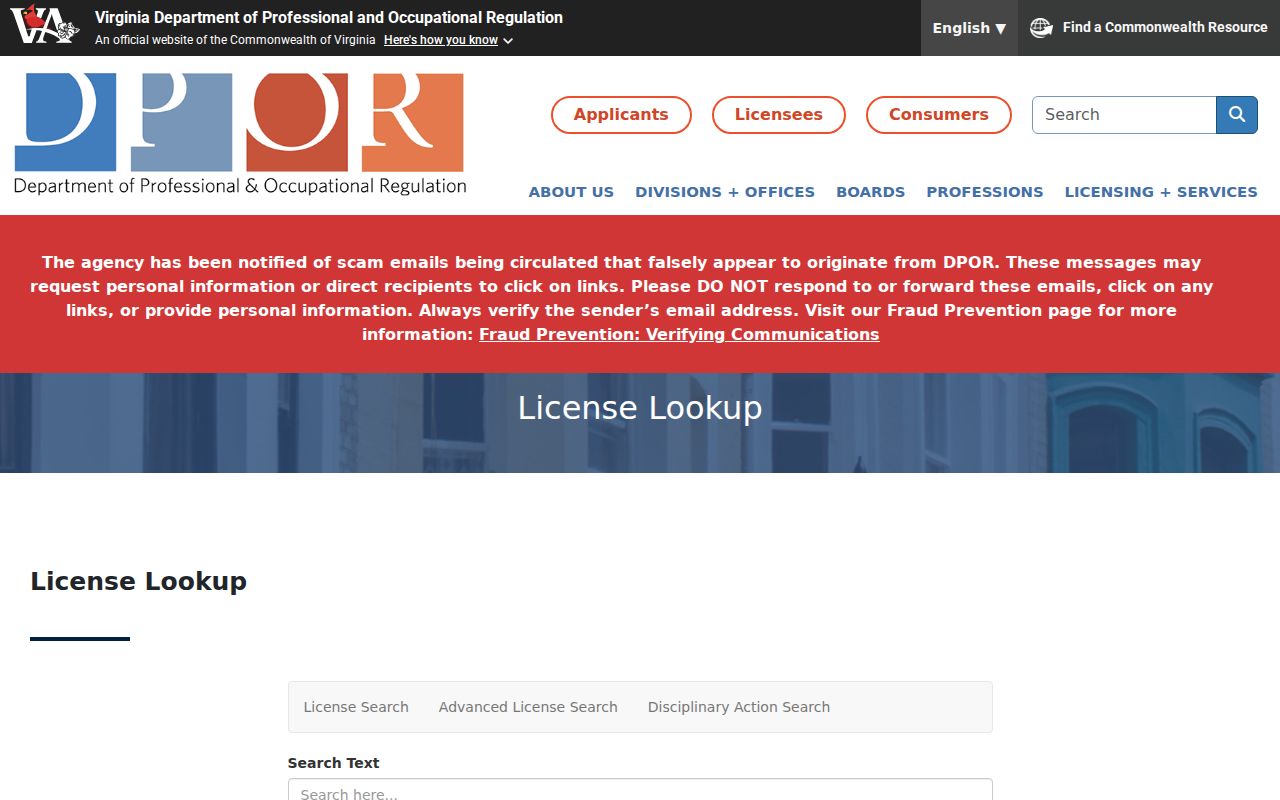
Virginia licenses its appraisers and contractors. Before hiring one for a valuation project, the state's professional-license lookup can verify a license record. A credential search confirms licensing information only; it does not validate an appraisal conclusion or guarantee a property's future sale price.
Use the Virginia Department of Professional and Occupational Regulation license lookup to check a professional credential.
Compare Manassas Assessments with Comparable Properties
A fair comparison starts with properties that share use, location, and size. The candidates should also match lot characteristics, age, and condition at the same valuation date. Beware the quick street-level estimate. A nearby property may carry different zoning or a different land area. It may also have a recent renovation that shifts its value profile, and without those details the comparison can mislead.
Pull up the GIS fields for land, building, and total value. This confirms the subject parcel. The same data helps you spot candidate comparisons. From there, request assessment cards or methodology information as Virginia law allows. The city assessment office can walk you through the account and explain its valuation process. A purchase, loan, or estate question calls for a licensed appraiser's separate market-value opinion.